A live vocal microphone has a harder job than it first appears. It must survive handling, keep the singer audible above the band and avoid turning the monitor system into a feedback alarm. A microphone that sounds beautiful alone may be less useful when cymbals, guitar cabinets and loudspeakers are only a few feet away.
All five choices below are handheld dynamics. They are not ranked from worst to best: each offers a different balance of tone, pickup pattern, price and forgiveness.
1. Shure SM58: the dependable reference point
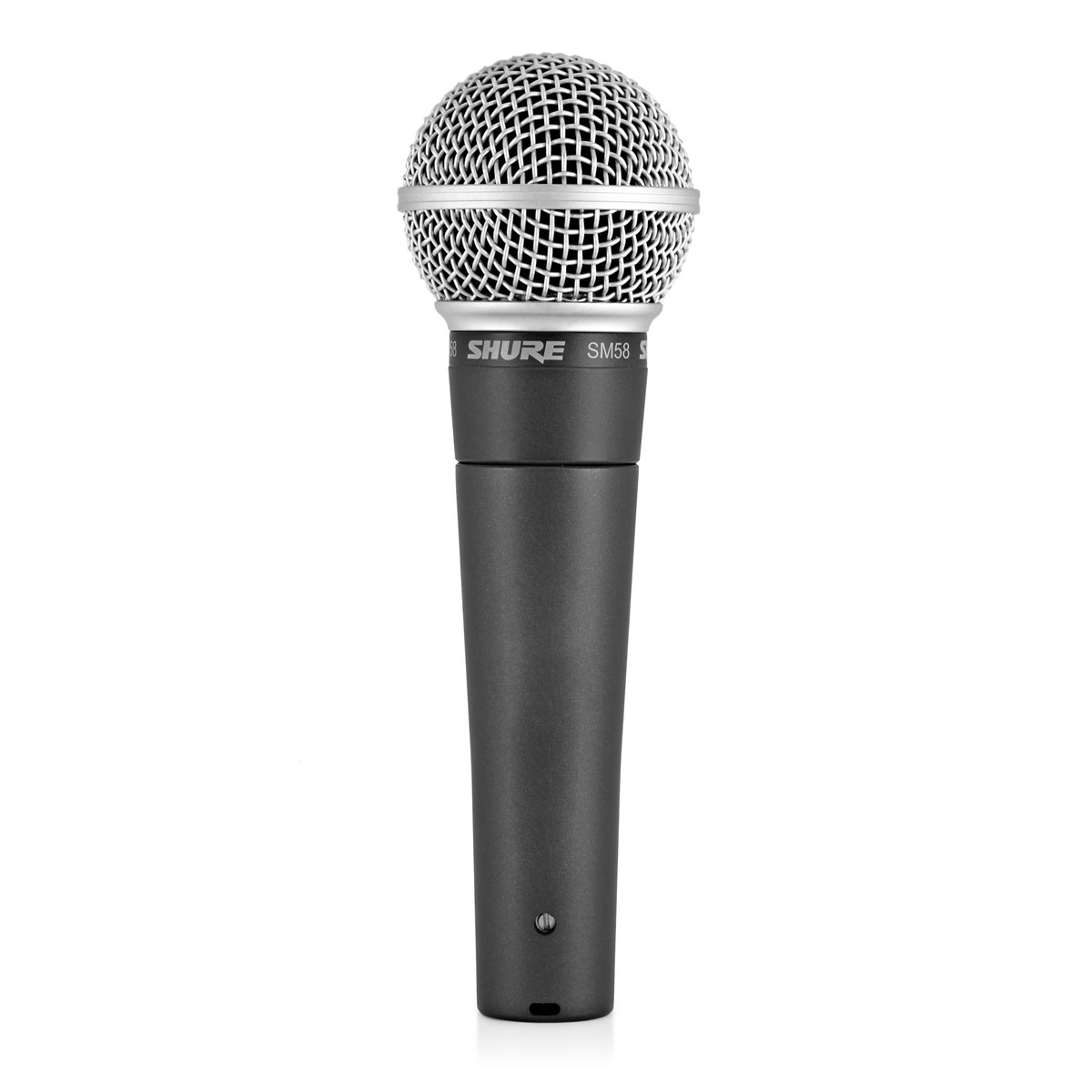
The SM58 remains the easy recommendation because engineers know it, venues carry spares and its cardioid pattern is reasonably forgiving when a singer moves around the grille. Its built-in spherical filter helps with breath and plosive noise, and the microphone tolerates years of ordinary stage life.
It does not flatter every voice. Some singers want more openness or a tighter pattern, but the SM58 is a useful baseline: if you can sing comfortably through one, you can work in almost any venue.
Best for: first live microphones, shared venues, rehearsal rooms and singers who value consistency over novelty.
Shure SM58 Dynamic Cardioid Vocal Microphone
This is the Shure SM58 Dynamic Cardioid Vocal Microphone from Shure, available now in Dynamic Microphones category on MicPro. For more details, images and how to order in the UK Read More below.
2. sE Electronics V7: clear and tightly focused
The V7 uses a supercardioid pattern and presents vocals with a crisp, open character. It can provide strong separation from stage spill and plenty of gain before feedback when the monitor and microphone are positioned correctly.
A tight pattern asks the singer to stay on-axis. It also has a small area of rear sensitivity, so a monitor placed directly behind it may be less successful than monitors positioned off to the sides according to the microphone’s rejection pattern.
Best for: loud bands, singers with consistent microphone technique and voices that benefit from extra clarity.
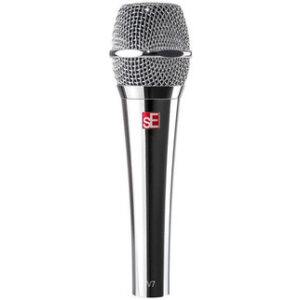
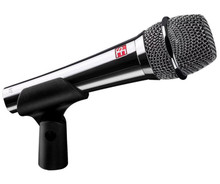

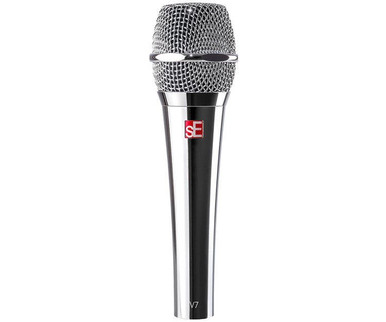
SE Electronics V7 Chrome Dynamic Vocal Microphone Bundle with Mic Stand and XLR Cable
This is the SE Electronics V7 Chrome Dynamic Vocal Microphone Bundle with Mic Stand and XLR Cable from sE Electronics, available now in Dynamic Microphones category on MicPro. Read More below.
3. Sennheiser e835: a natural, forgiving alternative
The e835 is a cardioid dynamic intended for lead and backing vocals. It is a sensible alternative to the default stage choices and is forgiving enough for singers who do not keep the microphone at a mathematically perfect angle.
Its balanced presentation works well for speech, rehearsal and general live vocals. Versions with an on/off switch can be useful for announcements and small systems, although a switch can also be knocked accidentally during a performance.
Best for: general-purpose vocals, rehearsal spaces, public speaking and singers who want a straightforward cardioid handheld.
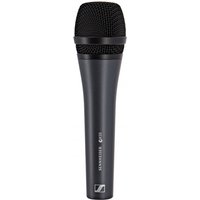
Sennheiser e835 Cardioid Vocal Microphone
This is the Sennheiser e835 Cardioid Vocal Microphone from Sennheiser, available now in Microphones category on MicPro. For more details, images and how to order in the UK Read More below.
4. Sennheiser e945: stronger isolation on a loud stage
The e945 is a supercardioid dynamic designed to keep the voice prominent while reducing surrounding stage sound. It is a useful step when the main problem is not the singer’s tone but a dense mix of cymbals, amplifiers and monitors entering the vocal channel.
That isolation depends on technique and loudspeaker placement. A singer who cups the grille changes the pickup pattern and removes much of the design advantage. Keep hands below the grille and work close to the microphone.
Best for: powerful bands, busy stages and singers who stay close and on-axis.
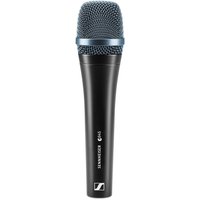
Sennheiser e945 Dynamic Vocal Microphone
This is the Sennheiser e945 Dynamic Vocal Microphone from Sennheiser, available now in Dynamic Microphones category on MicPro. For more details, images and how to order in the UK Read More below.
5. Shure Beta 58A: a brighter, tighter Shure option
The Beta 58A is not simply an expensive SM58. It has a supercardioid pattern, higher output and a more extended, present response. This can help a vocal cut through a mix, particularly when the singer has controlled technique.
The tighter pattern makes monitor placement more important and can make wandering off-axis more audible. It is a good upgrade when the singer and sound system benefit from those differences, not an automatic replacement for every SM58.
Best for: experienced live vocalists who want more presence and tighter rejection.
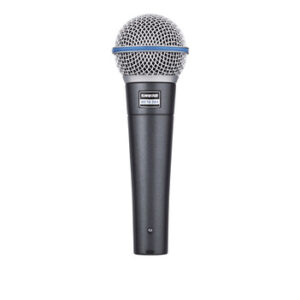

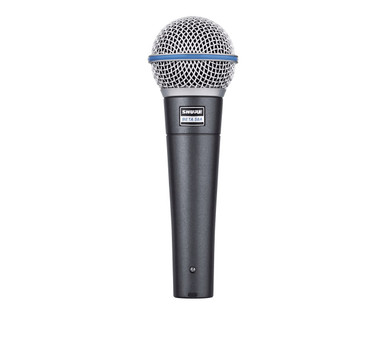
Shure BETA 58A Dynamic Vocal Microphone
This is the Shure BETA 58A Dynamic Vocal Microphone from Shure, available now in Dynamic Microphones category on MicPro. Read More below.
How to choose between cardioid and supercardioid
Cardioid microphones are generally more forgiving of movement and reject sound arriving from the rear. Supercardioid microphones focus more tightly on the singer but have a small rear pickup area. This means stage monitors must be placed to suit the pattern, not simply wherever they fit.
If feedback is already a problem, changing microphone may help, but speaker position, equalisation, stage volume and microphone technique usually need attention too.
Should you go wireless?
Wireless does not make a capsule sound better. It removes the cable and adds transmitters, receivers, batteries and radio-frequency planning. That is worthwhile when the singer moves around a large stage or the cable creates a real obstruction. For a singer standing at a fixed mic stand, a high-quality cable is cheaper and simpler.
If buying wireless in the UK, check that the operating band is legal and appropriate for the venues you use. Do not buy an old system solely because the microphone name is familiar.
A quick live test
Sing through the full performance level, not a quiet shop voice.
Listen with the band or a backing track, not only through headphones.
Check plosives, handling noise and how much the tone changes when you move slightly off-axis.
Raise the monitor to a realistic level and listen for feedback margin.
Choose the microphone that makes you sing naturally; fighting the microphone is not an upgrade.