
Description
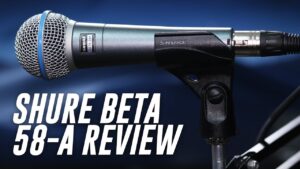
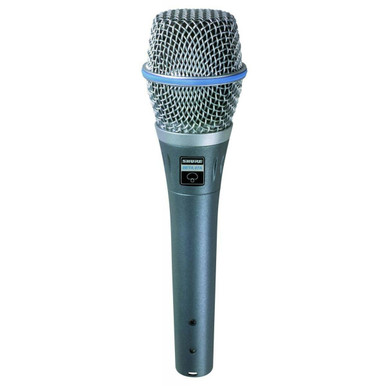
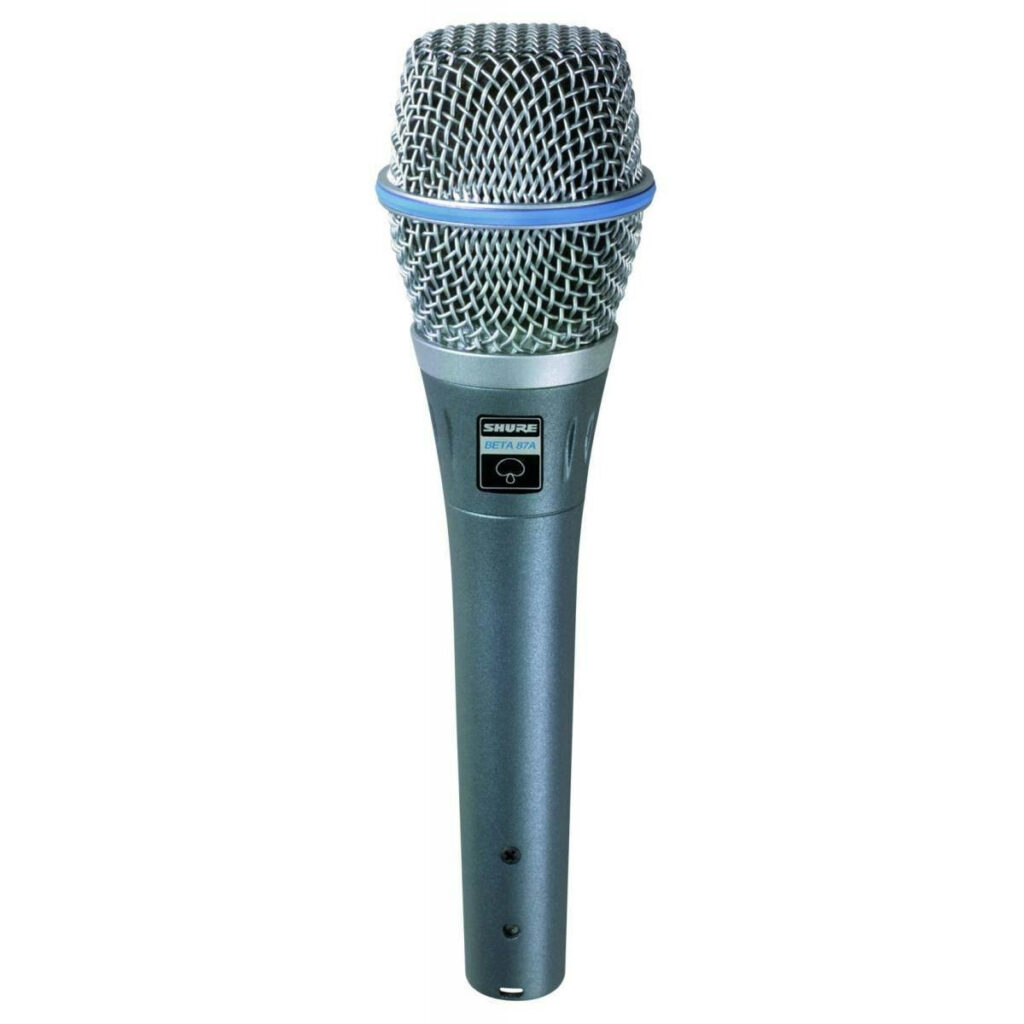
The Shure Beta 87A is a premium quality supercardioid hand-held electret condenser vocal microphone with exceptionally smooth frequency response and high sound pressure level capability. Used for professional sound reinforcement, broadcasting, and studio recording applications, the Beta 87A combines superb performance with the ruggedness needed for touring and field production.
The Beta 87A features a controlled low-frequency roll-off that compensates for proximity effect and prevents the “boomy” sound often associated with close pick-up. The characteristic Shure presence rise brightens the upper midrange. The tight supercardioid pattern, with null points at approximately 125 degrees, provides maximum isolation from other vocalists or instruments while offering minimal off-axis coloration. The Beta 87A operates on phantom power.
Features
- Smooth frequency response with gradual presence rise
- Highly consistent supercardioid polar pattern provides superior gain-before-feedback
- Electronic low-frequency roll-off compensates for proximity effect
- Wide dynamic range (117 dB) and low distortion characteristics
- Very low susceptibility to RFI and electromagnetic hum
- Advanced cartridge shock-mount system absorbs mechanical shocks and reduces handling noise
- Built-in pop filter reduces undesirable wind and breath sounds
- Legendary Shure quality and reliability
Specifications
- Cartridge Type: Condenser (electret bias)
- Frequency Response: 50 to 20,000 Hz
- Polar Pattern: Supercardioid
- Output Impedance: Rated at 150 ohms (100 ohms actual +/- 20%) Recommended minimum load impedance: 800 ohms
- Sensitivity: (at 1,000 Hz) Open Circuit Voltage -52.5 dBV/Pa (2 mV) (1 Pa = 94 dB SPL)
- Clipping Level: (at 1,000 Hz) 1000 ohm Load: -6 dBV (0.5 V)
- Maximum SPL: (at 1,000 Hz) 140.5 dB (0.25% THD, 1000 ohm load)
- Self-Noise: (equivalent sound pressure level; measured with true rms voltmeter)
- 23.5 dB typical, A-weighted
- 25.5 dB typical, weighted per DIN 45 405
- Dynamic Range: 117 dB (maximum SPL to A-weighted noise level)
- Signal-to-Noise Ratio: 70.5 dB at 94 dB SPL (IEC 651)
- (S/N ratio is difference between 94 dB SPL and equivalent SPL of self-noise A-weighted.)
- Polarity: Positive pressure on diaphragm produces positive voltage on pin 2 relative to pin 3
- Power: Phantom Supply Requirement: 11 to 52 Vdc, positive at both pins 2 and 3
- Current Drain: 1.0 to 1.2 mA
- Connector: Three-pin (XLR) professional audio
- Case: Aluminum construction with blue metallic finish, and hardened steel grille with nickel satin chrome plating
- Net Weight: 207 grams (7.6 oz)