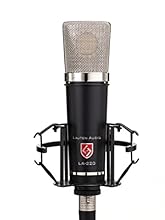
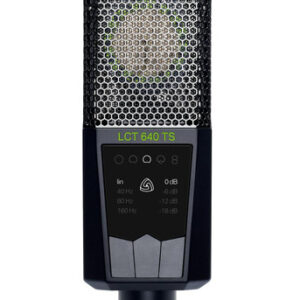
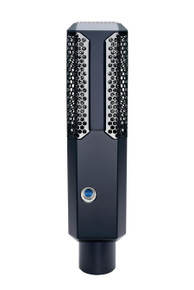
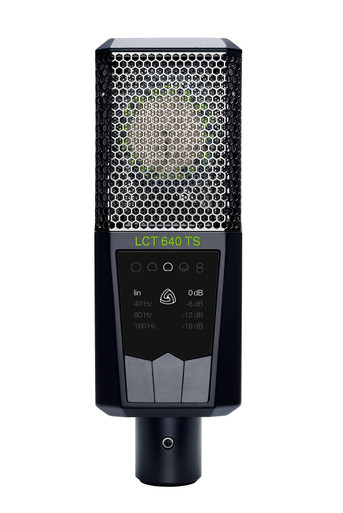
Lewitt LCT 640 TS Multi-Pattern Large-Diapragm Condenser Microphone

£683.00

Lewitt LCT 640 TS Multi-Pattern Large-Diapragm Condenser Microphone is New by Lewitt . Get it superfast with our delivery roadie service to any door in the UK Read More for product details.

More Details


Description

The Lewitt LCT 640 TS Multi-Pattern Large-Diapragm Condenser Microphone is New Delivered to all areas of the UK using our roadie delivery service.

Here’s what Lewitt say about the LCT640 TS Microphone

Designed and engineered in Austria, LEWITT’s new LCT 640 TS will revolutionize the way we think about the recording process. Set to Dual Output Mode the signal of the mics front and back diaphragm is provided by independent circuitries, any kind of polar pattern can be realized dynamically – even after the recording.

Already recorded material can be changed dynamically by adjusting the polar pattern – room sound can be added or decreased, even a turn by 180° is possible. ​After recording with the LCT 640 TS you can use LEWITT’s Polarizer plugin to tweak the material with incredible ease of use.

In Multi-Pattern Mode the LCT 640 TS has all the well-known characteristics of a great sounding studio multi-pattern condenser mic. It features five polar patterns: omni, wide cardioid, cardioid, supercardioid and figure-8. Perfect Match technology takes care that all LCT 640 TS are having the exact same sensitivity at 1 kHz. The Dual Output Mode allows to record in stereo with only one LCT 640 TS – usually only possible with two microphones. Clipping History, 4 low-cut and pre-attenuation settings round off the outstanding feature list of the LCT 640 TS. The LCT 640 TS opens doors to a new world of recording techniques.

Specifications

  • Type: Condenser, permanently polarized
  • Acoustical operating principle: Pressure gradient transducer
  • Diaphragm: 3 micron gold sputtered Mylar
  • Transducer Ø: 25.4 mm, 1 in
  • Polar pattern (Dual Output Mode) : Create any polar pattern in post-production
  • Polar pattern (Multi-Pattern Mode) : omni, wide cardioid, cardioid, supercardioid, figure-8 
  • Sensitivity: 31.4 mV/Pa, -30.1 dBV/Pa (cardioid), 30.3 mV/Pa, -30.3 dBV/Pa (omni), 34.1 mV/Pa, -29.4 dBV/Pa (figure-8)
  • Equivalent noise level: 10.5 dB (A), cardioid
  • Max. SPL for 0.5 % THD : 133.8 dBSPL, 0 dB pre-attenuation
  • Signal/ Noise Ratio: 83.5 dB (A)
  • Pre-attenuation pad – 0 db, -6 dB, -12 dB, -18 dB
  • Low-cut filter- ear, 40 Hz (12 dB/oct), 80 Hz (12 dB/oct), 160 Hz (6 dB/oct)
  • Dynamic range: 123.3 dB (A)
  • Internal impedance: 110 Ω
  • Rated load impedance: 1.000 Ω
  • Supply voltage: 48 V +/- 4 V
  • Current consumption: 5.1 mA
  • Connector: Gold plated 3-pin XLR + Mini 3-pin XLR
  • Microphone dimensions: 158 x 52 x 36 mm, 6.22 x 2.04 x 1.42 in
  • Microphone net weight: 425 g, 14.9  oz

Additional information

Weight 2.5 lbs

Information about Lewitt

LEWITT is a modern microphone manufacturer known for clean, precise sound and contemporary design. The brand focuses on combining high technical performance with practical features, making their microphones popular with home studios as well as professional recording environments. LEWITT microphones are widely used for vocals, acoustic instruments, and content creation, offering low noise and detailed capture. MicPro suggests LEWITT for users looking for modern studio microphones with a neutral, accurate sound and thoughtful design.

Information about Condenser Microphones

Condenser microphones are widely used in studio recording because of their sensitivity, clarity, and ability to capture fine detail. They are commonly chosen for vocals, acoustic instruments, piano, strings, and room recording, where accuracy and nuance matter. Condenser microphones usually require phantom power and are available in large and small diaphragm designs, making them suitable for everything from intimate vocal takes to detailed overhead and ambient recordings.

Information about Microphones

Microphones are essential tools for capturing sound in recording, broadcast, and live performance. Different microphone types are designed for different sources, environments, and uses, from studio vocals and instruments to live sound and field recording. Choosing the right microphone depends on factors such as sound source, room acoustics, sensitivity, and the character you want to capture.

Information about Condenser

Condenser microphones are highly sensitive microphones designed to capture detail, clarity, and nuance. They are widely used in studio recording for vocals, acoustic instruments, piano, and ambient sound. Condenser microphones typically require phantom power and are available in large and small diaphragm designs, making them versatile tools for accurate sound capture.

Available for Amazon Prime